What is a Bank Statement Loan?
Contents
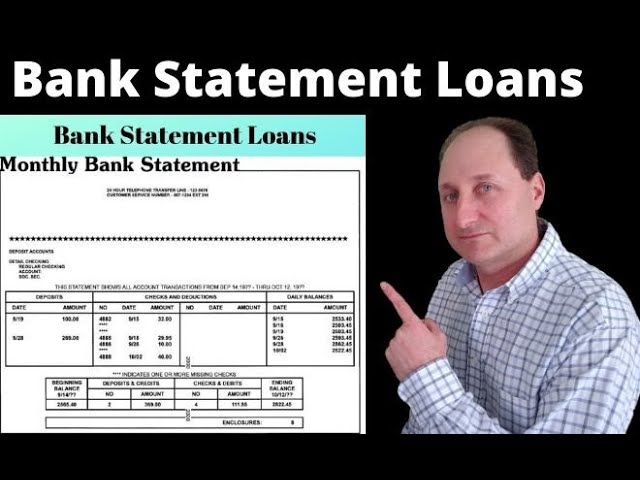
A bank statement loan is a type of loan that is given to self-employed individuals based on their bank statements. This type of loan is given to people who may not have the traditional forms of income verification, such as W-2s or pay stubs.
Checkout this video:
What is a bank statement loan?
A bank statement loan is a type of mortgage that allows self-employed borrowers to qualify using their business’s bank statements instead of their personal tax returns. Because self-employed workers often have a higher income than their tax returns show, this type of loan can help them qualify for a larger loan amount and purchase the home they want.
How does a bank statement loan work?
A bank statement loan is a mortgage program for self-employed borrowers that use business or personal bank statements, instead of tax returns, to prove their income.
There are two types of bank statement loans:
1) Personal – for sole proprietors and individual borrowers
2) Business – for business owners with at least 25% ownership in the company
The main requirements for both personal and business loans are:
-At least 12 months of bank statements (personal or business)
-No more than 2 months of delinquent payments in the past 12 months
-Minimum credit score 620+
What are the benefits of a bank statement loan?
A bank statement loan is a mortgage program that allows self-employed borrowers to qualify using business or personal bank statements instead of tax returns. This loan program can be used by borrowers who may have trouble qualifying for a traditional mortgage because of fluctuating income or difficulty documenting their income.
Bank statement loans are available in both first and second mortgage programs. The benefits of a bank statement loan include:
-No tax returns required
-Flexible qualifying requirements
-Can be used to purchase or refinance a home
-Competitive interest rates
What are the requirements for a bank statement loan?
To qualify for a bank statement loan, borrowers typically must provide 12 months’ worth of bank statements showing income and assets. Some lenders may require tax returns in addition to bank statements. The minimum credit score for a bank statement loan is usually 680, although some lenders may require a higher score.
How can I get a bank statement loan?
A bank statement loan allows self-employed borrowers to use their personal or business bank statements to document income instead of providing tax returns. If you are unable to provide tax returns because you are self-employed, have been employed for a short period of time, or have other income sources such as investments or rental property, a bank statement loan could be a good option for you.
To qualify for a bank statement loan, borrowers must have a minimum of 12 months of personal or business banking history. Personal bank statement loans are available for both primary and secondary residences, and business loans can be used for investment properties as well.
When applying for a bank statement loan, borrowers will need to provide bank statements for the previous 12 months as well as any relevant supporting documentation such as profit and loss statements or 1099 forms. Borrowers with strong credit and ample reserves may be able to qualify for loans with Loan-to-Value (LTV) ratios up to 90%.