Where to Find Your Credit Card Number
Contents
If you’re looking for your credit card number, there are a few places you can check. Here’s a quick rundown of where you might find it.
Checkout this video:

Introduction
Your credit card number is a very important piece of information. It is used to identify you and your account when you make purchases or other transactions. You should never give your credit card number to anyone unless you are absolutely sure that they are legitimate. There are a few different places where you can find your credit card number, and we will go over them all in this article.
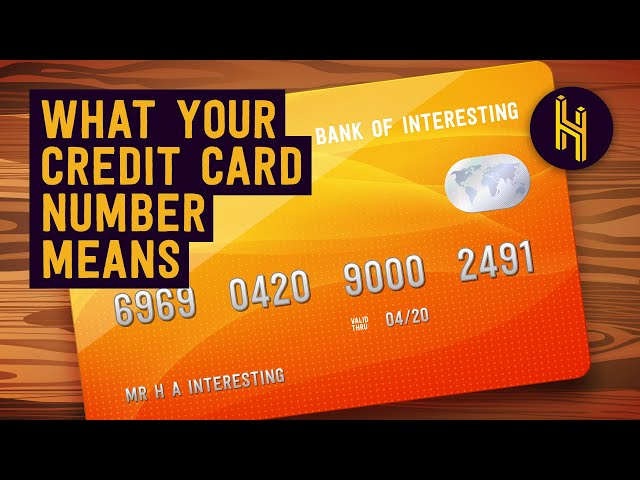
First, let’s start with the obvious: the front of your credit card. Your credit card number will be printed right on the front of your card, usually in the bottom-right corner. If you have a Visa, Mastercard, or Discover card, the number will be 16 digits long. If you have an American Express card, the number will be 15 digits long.
Another place where you can find your credit card number is on your statement. Every month, you should receive a statement from your credit card company that lists all of the transactions that have been made on your account. Your credit card number will be listed on this statement next to each transaction.
Finally, if you need to contact customer service for your credit card company, they will probably ask for your credit card number. This is for verification purposes and is perfectly safe as long as you are talking to a real customer service representative from your credit card company.
As you can see, there are a few different places where you can find your credit card number. Just remember to keep it safe and only give it to people who need it!
How to Find Your Credit Card Number
Your credit card number is a very important piece of information. It is used to identify you and your account. You can find your credit card number on the front of your card. The number will be printed in either raised or embossed numbers. If you cannot find your credit card number, please contact your credit card issuer.
On the Card Itself
The vast majority of credit cards will have your card number printed on the front side of the card, usually towards the right hand side. The number will be embossed, meaning that it will be raised up from the surface of the card so that you can feel it if you run your finger over it. In addition to your credit card number, this section of the card will also have your name, and the expiration date for your card.
There may also be a small logo or symbol in this section of the card. This is called the security code, and is used to verify that you actually have the physical credit card in your possession when making online purchases. The most common security code is a 3-digit number printed on the back of the card towards the right hand side.
In Your Credit Card Statement
Your credit card number is typically imprinted on the front of your credit card, and it usually consists of 16 digits. The first six digits are your credit card issuer identification number (IIN), which is also called your Bank Identification Number (BIN). The next nine digits are your account number, and the last digit is a check digit used to validate the credit card number.
If you have a credit card with a 12-digit account number, such as Discover or American Express, your account number may be printed on the back of the card. You can usually find it above or below the signature panel.
In Your Online Credit Card Account
If you have an online account with your credit card issuer, you can usually find your credit card number by logging into your account. Once you’re logged in, look for a section labeled “Account Information,” “My Account,” or something similar. In this section, you should see your credit card number listed.
Conclusion
Now that you know all the different places your credit card number could be hiding, make sure you keep an eye out for it the next time you go to make a purchase. Remember, if you can’t find your credit card number, you can always contact your credit card company for assistance.